Introduction: On the way up to the summit of the Malecoste (2444 m) it is easy to meet inexperienced hikers, poorly prepared athletically and often with little familiarity with the mountains. This route, although marked for experienced hikers, remains a mountaineering route with points whose difficulty can reach grade II; you need to assess your holds and move with caution, one hold after the other. The ridge is remarkably airy and not recommended for hikers who suffer from vertigo.
Route characteristics: The path is perfectly marked out; there are only two points where you may have some doubt about the way to follow, but there is no real chance of getting lost.
The same ridge can be reached from the opposite side with the climb to the Pizzo di Camarda by the Iaccio S. Pietro.
Route description
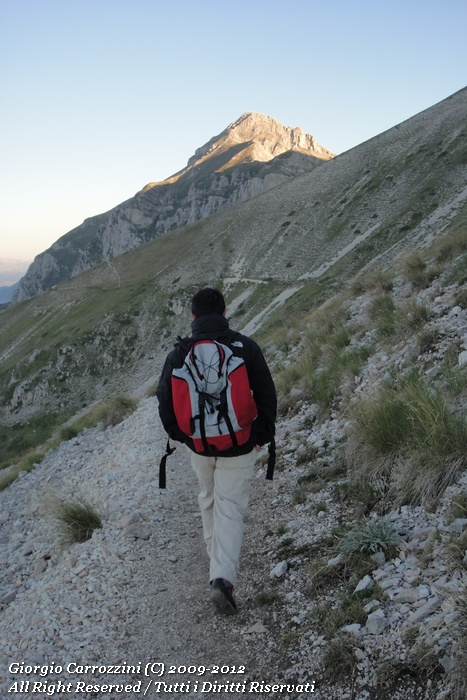
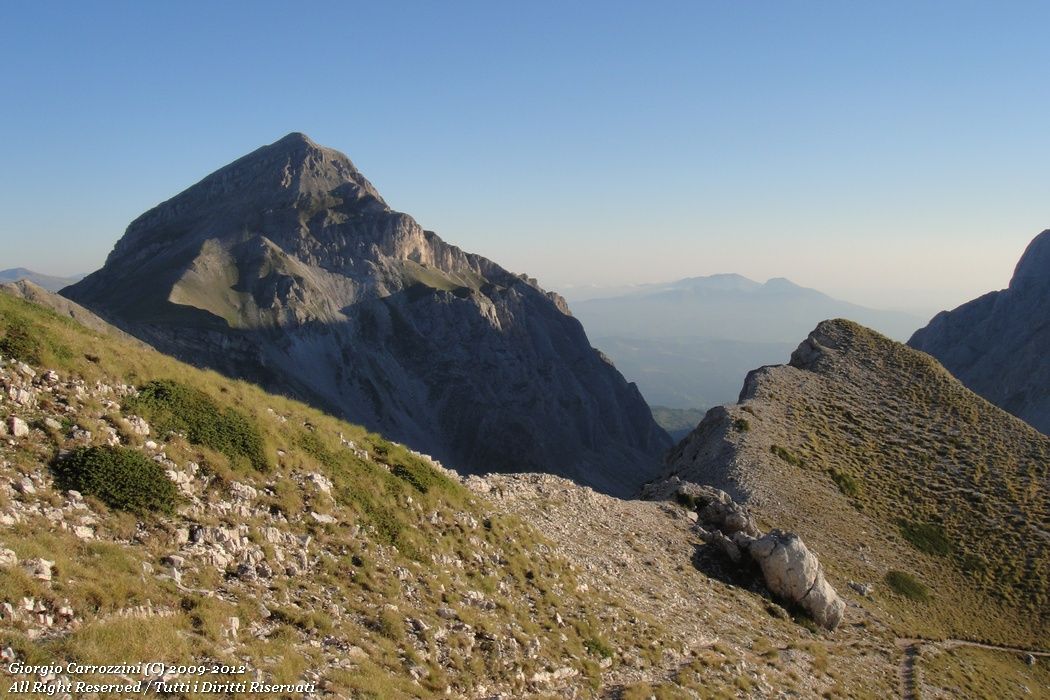
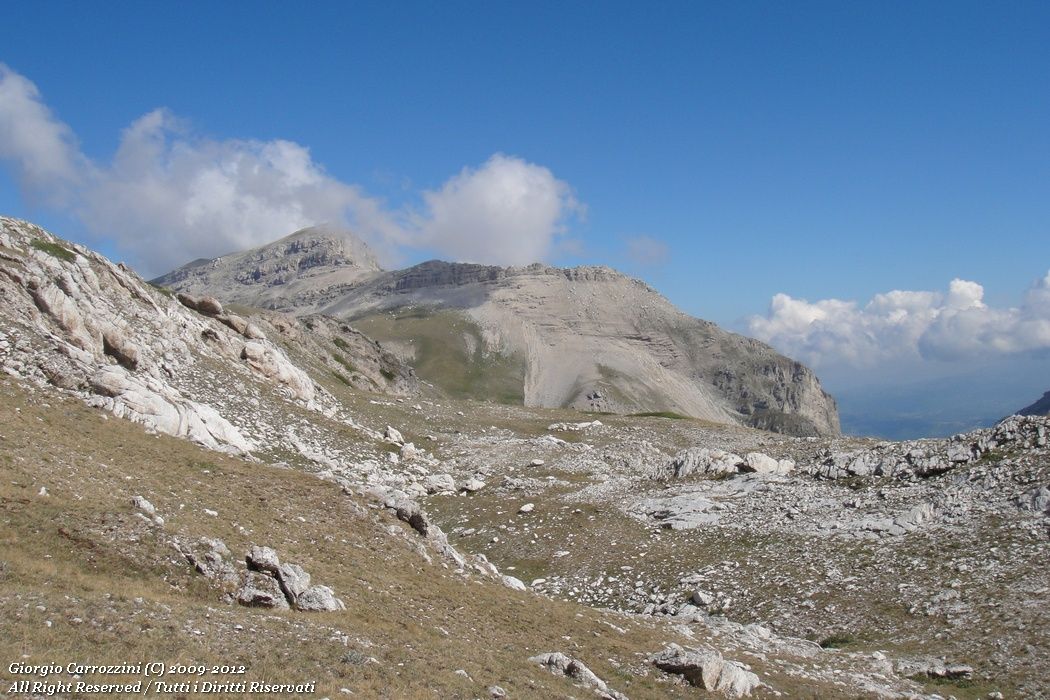
Having left the car, you go along the edge of the cable car building; here you pick out the path that runs along beneath Monte Portella. The path is extremely well marked out and climbs gradually towards the Passo del Portella. You reach a little saddle where, on a rock, there is the writing “V1”; ignore the writing and carry on to the left. Slowly you reach the foot of the imposing crown of the Pizzo Cefalone. Following the path you go along beneath the Cefalone until you come to a chute that leads upwards in the direction of the summit.
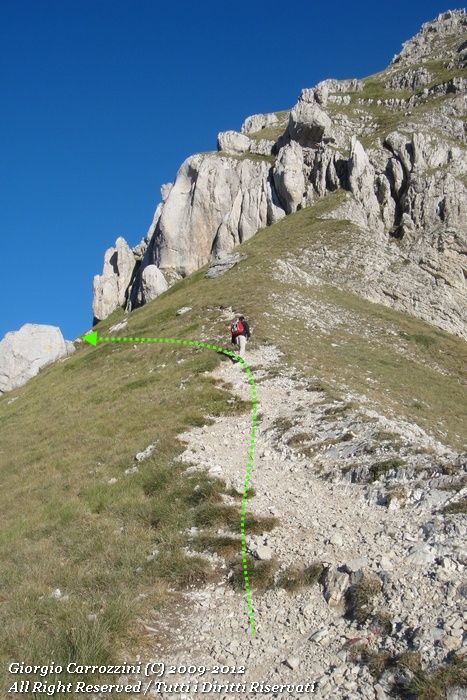
Near a very obvious notch you turn right without going up to the summit of the Cefalone.
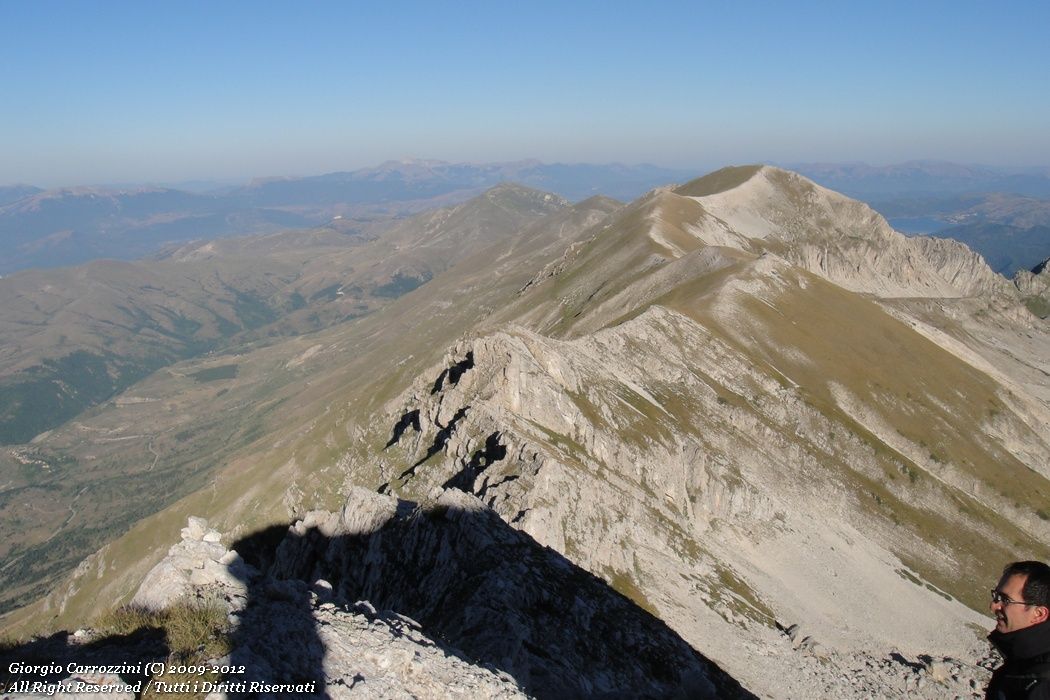
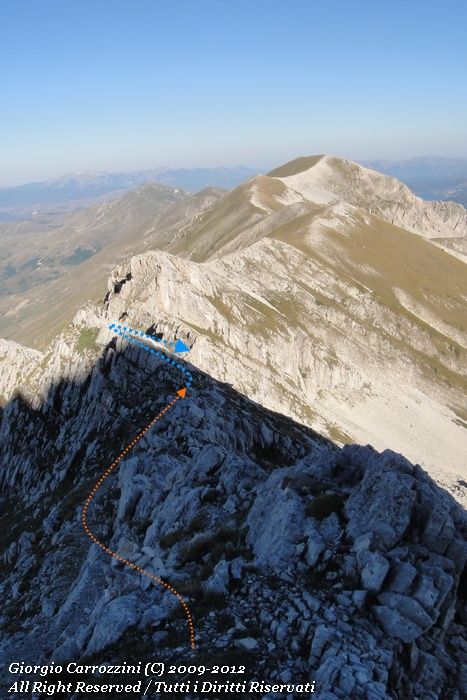
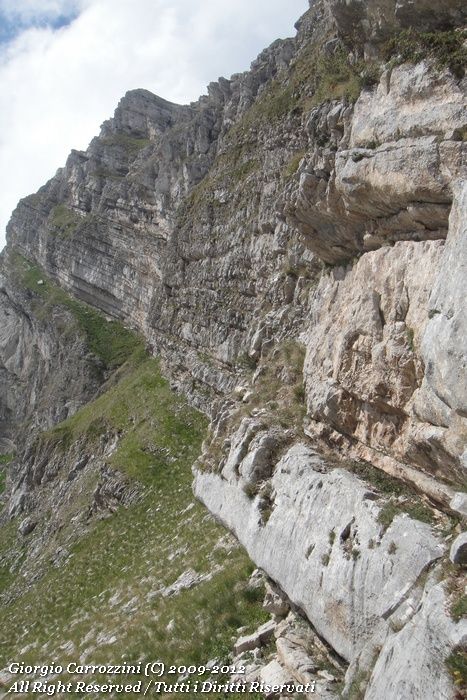
Beyond the notch the path will start to drop and will become more and more exposed. It is here that the greatest attention must be kept up. In fact the route moves over tilted rock slabs that often offer few very secure footholds. Using your hands is not just an instinctive matter, it becomes practically compulsory to get past some exposed moves. Along the ridge there are pegs for setting up fixed ropes for the less experienced (that would be a good and proper thing). The climb to the Picco Giovanni Paolo II takes place inside a small gully of earth and fine gravel that goes into a hole. To climb it you need not only to pay great attention to where you put your feet but also to find the right handholds. The passage through the hole, being very narrow, is easier without a rucksack. Here the mountaineering difficulties end. From the Picco Giovanni Paolo II the route runs along a broad grassy ridge to the summit of the Malecoste. Not far from the true summit of the Malecoste you can pick out a ridge, aesthetically very sharply defined, that goes down towards the Forchetta della Falsca. Beautiful views towards Monte Corvo and the Pizzo d'Intermesoli. From here you can understand the extreme isolation of these summits compared with the other peaks of the massif.
For the return you can follow the way you came, although the descent from the gendarme of the Picco Giovanni Paolo II is in any case problematic for those who are not properly equipped. A sling would be decidedly useful to create a point of support and balance.
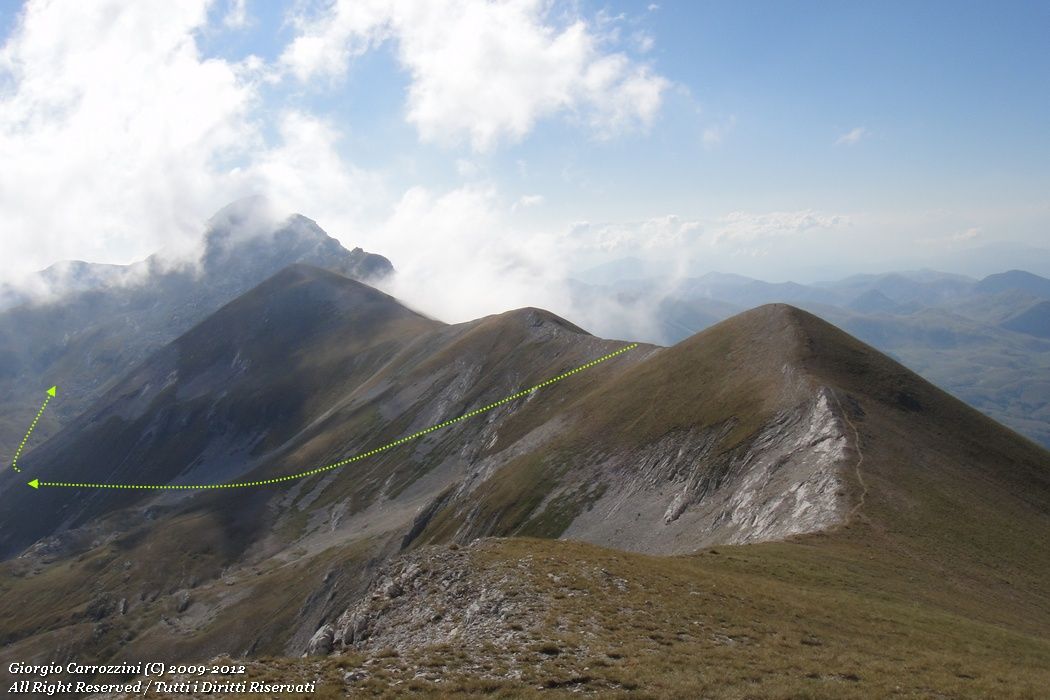
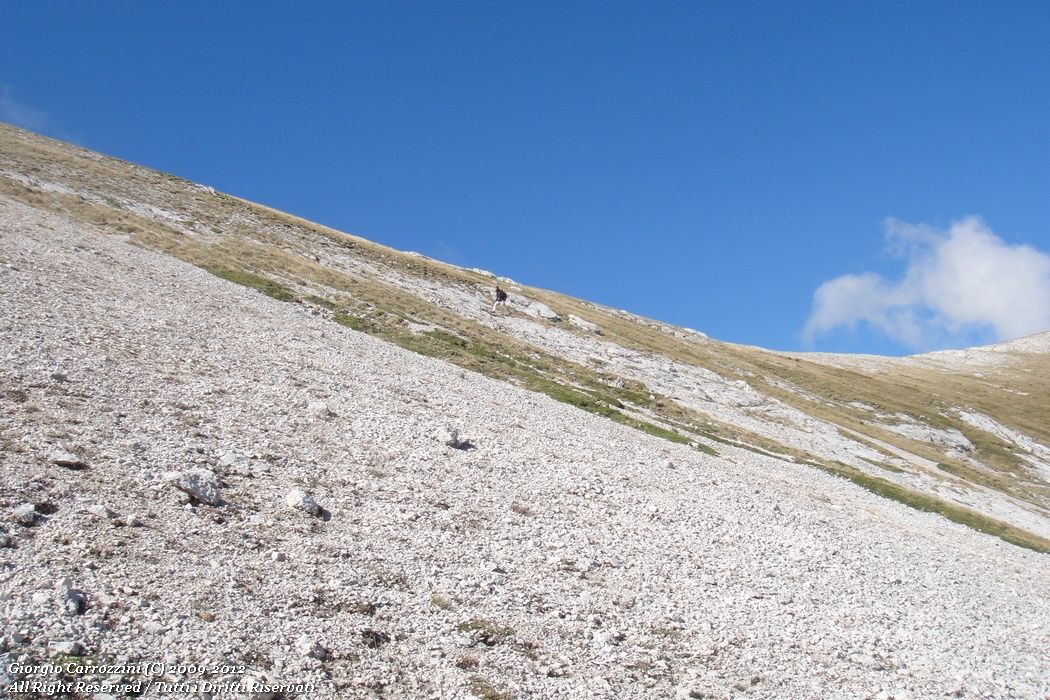
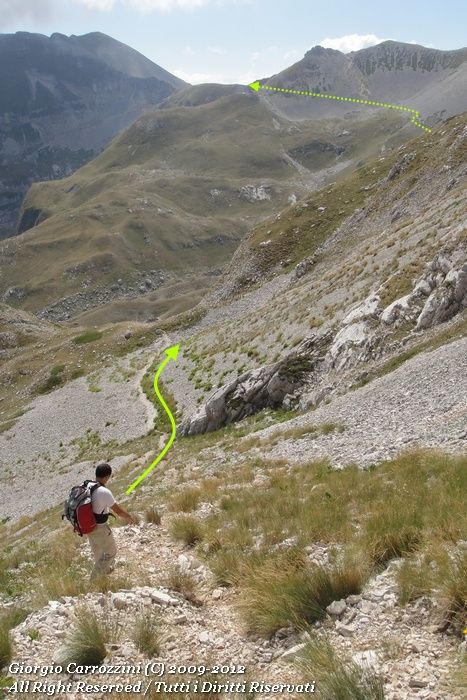
An alternative way back is possible via the Venaquaro valley and the Sella del Cefalone. From the summit of the Malecoste you can pick out 3 small saddles. The second is the most comfortable way down, partly over loose rubble and gravel. Here you go down almost to the bottom of the Vallone del Venaquaro. Moving along the foot of the northern crest of the Cresta del Malecoste you head in the direction of the Cefalone saddle. The Vallone del Venaquaro has a number of extremely marked and deep dolines that seem to be more sinkholes than real dolines (certainly worth seeing). You climb back up to the Cefalone saddle by a path visible from a long way off. At the Cefalone saddle you go north towards the Pizzo d'Intermesoli for just 200 metres, as far as the saddle where scanty waymarking picks out the path that leads to the Passo del Portella. Coming down from the saddle there are two little moves where you need to use your hands to find balance and the right holds. The path leads to the foot of the Portella near a slope of loose rubble. To avoid the rubble slope you can take the easier path on the left, which climbs comfortably and gradually to the Passo del Portella (2280 m). Here you rejoin the outward path that will take you back to Campo Imperatore.
Variants and alternatives
One variant includes the climb to the summit of the Pizzo Cefalone. Before carrying on to the notch, you climb straight up using hands and feet, with easy moves on rock, to the summit of the Pizzo Cefalone.
Notes on effort and difficulty
Visitor centres and accommodation
Frequently asked questions
Is the Malecoste ridge difficult?
It is marked as EE (for experienced hikers) but has a mountaineering character: on tilted, exposed slabs you need hands and feet, with moves up to grade II, and the Picco Giovanni Paolo II is climbed up a small gully that goes into a hole. It is not recommended for anyone who suffers from vertigo.
How do you get back to Campo Imperatore from the Malecoste?
You can return by the way you came, but the descent from the Picco Giovanni Paolo II is delicate without a sling. Alternatively you go down into the Vallone del Venaquaro, full of deep dolines, and climb back up to the Cefalone saddle and the Passo del Portella.